
 CALL US NOW
 EMAIL US NOW
Most bed bug infestations take anywhere from several weeks to multiple months to fully resolve, depending on the severity of the infestation, the treatment method used, how quickly the problem was discovered, and whether professional extermination occurs. Minor infestations caught early may improve within a few weeks, while larger infestations, especially those in apartments, hotels, cruise ships, or shared housing, can take months to eliminate completely.
One of the biggest misconceptions about bed bugs is believing treatment works immediately. In reality, successful eradication often requires multiple visits, monitoring, and continued prevention efforts.
Key Takeaways
- Small infestations may resolve in 2–6 weeks
- Moderate infestations often require 1–3 months
- Severe infestations can last several months or longer
- Bed bug eggs make eradication significantly more difficult
- Professional extermination usually works faster than DIY treatment
- Multi-unit housing and shared spaces often extend timelines
Understanding Why Bed Bug Infestations Take So Long
Bed bugs are difficult pests to eliminate because they hide exceptionally well and reproduce quickly. Eliminating visible bugs does not necessarily mean the infestation is gone.
Adult bed bugs can survive for extended periods without feeding, while eggs hidden deep inside furniture, walls, mattresses, or cracks may hatch later. This is why treatment frequently requires repeated follow-up rather than a one-time solution.
Several factors influence how long eradication takes:
- Size of infestation
- How long the infestation existed before discovery
- Treatment methods used
- Cooperation with extermination instructions
- Whether neighboring units are affected
- Property type (hotel, apartment, cruise ship, workplace, etc.)
The longer bed bugs remain undetected, the longer elimination often takes.
What Are the First Signs of Bed Bugs?
Many infestations grow for weeks, or even months, before people realize bed bugs are present. Early identification often makes the difference between a smaller problem that resolves quickly and a widespread infestation that becomes expensive and difficult to eliminate.
The first warning signs are not always visible bugs. Bed bugs are excellent at hiding, and many people initially mistake early symptoms for mosquitoes, allergic reactions, or unrelated skin irritation.
Common early warning signs include:
- Small red bites appearing overnight
- Bite patterns that appear in clusters or lines
- Tiny rust-colored stains on bedding
- Small dark spots that resemble pepper flakes
- Shed bed bug skins
- Small white eggs near mattress seams
- A musty or sweet odor in severe infestations
- Visible bed bugs near mattress corners or furniture joints
Early detection significantly reduces how long an infestation may last. The faster treatment begins, the lower the chance bed bugs spread into neighboring rooms, luggage, furniture, or adjoining units.
Bed Bug Life Cycle Impacts Treatment Time
One major reason infestations persist is the bed bug life cycle itself. Eliminating adults does not automatically eliminate eggs.
Bed bugs typically develop through several stages:
- Egg Stage: Bed bug eggs are extremely small and difficult to detect. Eggs often hatch within approximately one to two weeks under favorable conditions because many treatments target active bugs rather than eggs, follow-up treatment becomes critical.
- Nymph Stage: After hatching, immature bed bugs, called nymphs, must feed before developing into adults; nymphs can remain hidden for long periods, making infestations appear resolved before activity returns.
- Adult Bed Bug Stage: Adult bed bugs reproduce rapidly once established. A single female can lay hundreds of eggs over her lifespan.
This reproductive cycle is one reason delayed treatment often leads to substantially larger infestations.
Typical Resolution Timeline By Infestation Severity
The amount of time required often depends heavily on infestation size.
Early-Stage Infestation
A small infestation identified quickly may resolve faster.
Typical timeline:
- Approximately 2–6 weeks
- Usually limited treatment areas
- Often fewer follow-up visits
Early detection creates the best opportunity for faster resolution.
Moderate Infestation
Moderate infestations often involve multiple rooms, furniture pieces, or hidden harborages.
Typical timeline:
- Approximately 1–3 months
- Multiple treatments frequently required
- Increased monitoring needed
This is where many people begin realizing DIY approaches may not work effectively.
Severe Infestation
Large infestations frequently spread beyond one room or unit and may affect neighboring spaces.
Typical timeline:
- Several months or longer
- Multiple professional treatments
- Ongoing monitoring
- Higher reinfestation risk
Hotels, apartment buildings, dormitories, nursing homes, and cruise ships sometimes experience prolonged resolution periods because bed bugs spread easily between connected environments.
Professional Treatment Usually Works Faster
Professional extermination generally resolves infestations faster than attempting home remedies alone.
Professional approaches may include:
- Heat treatment
- Targeted chemical applications
- Steam treatment
- Mattress encasements
- Follow-up inspections
- Integrated pest management strategies
Most professional exterminators schedule multiple visits because bed bug eradication rarely succeeds from one treatment alone.
Can You Stay in a Property During Bed Bug Treatment?
Whether someone can remain inside a property during treatment depends heavily on the extermination method being used. Some treatment approaches allow occupancy shortly afterward, while others require temporary relocation.
Professional exterminators often provide specific instructions that should be followed carefully. Failing to comply with treatment protocols can reduce effectiveness and increase the likelihood of reinfestation.
Treatment methods that may require temporary absence include:
- Chemical treatment applications
- Whole-room heat treatment
- Fumigation methods
- Large-scale apartment remediation
Some people assume leaving permanently is the best solution, but moving belongings too quickly can unintentionally spread bed bugs into vehicles, luggage, or new locations.
If exposure occurred in a hotel, cruise ship, resort, apartment complex, or short-term rental, documentation before relocation remains especially important. Photographs, communication records, and treatment notices may become valuable evidence later.
DIY Treatment Frequently Extends Timelines
Many people initially attempt:
- Over-the-counter sprays
- Essential oils
- Foggers
- Rubbing alcohol
- Store-bought pesticides
- Internet home remedies
Unfortunately, DIY approaches often kill only visible bugs while leaving eggs and hidden populations untouched.
This frequently creates a frustrating cycle:
- Temporary improvement
- New bites appear weeks later
- Additional DIY treatment occurs
- Infestation spreads further
Delayed professional intervention often increases both eradication timelines and overall costs.
What To Do If Bed Bug Treatment Fails
Bed bug treatment does not always work the first time. One of the most frustrating realities about infestations is that improvement does not necessarily mean eradication.
Bed bug eggs may hatch weeks later, neighboring units may remain untreated, or incomplete preparation may allow populations to survive. When treatment appears unsuccessful, taking the right next steps matters.
If treatment fails:
- Notify management or ownership immediately
- Document continued bites or activity
- Photograph ongoing evidence
- Request updated treatment documentation
- Ask whether neighboring units were inspected
- Preserve communication records
- Seek professional reinspection
Repeated failed treatment efforts sometimes raise larger concerns regarding property management decisions. Delays, incomplete extermination efforts, or repeated exposure situations occasionally create legal questions about responsibility.
The Bed Bug Barrister regularly evaluates situations involving delayed response efforts, repeated infestations, and circumstances where inadequate action prolonged exposure.
Example Timelines From Real-World Scenarios
Every infestation develops differently depending on the environment, severity, and response efforts. The following examples illustrate why some infestations disappear relatively quickly while others become long-term problems.
Hotel Room Identified Immediately
A hotel discovers bed bugs after a guest complaint and immediately removes the room from service for professional treatment.
- Typical timeline: Several weeks.
Fast action reduces spread and often limits treatment complexity.
Cruise Ship Cabin Exposure
Passengers discover bed bugs during a voyage.
- Typical timeline: Variable.
Treatment often depends on cabin turnover schedules, sanitation protocols, and whether infestation spread occurred.
These examples show why response speed often determines how quickly infestations resolve.
Why Some Bed Bug Infestations Keep Coming Back
Recurring infestations do not always mean treatment failed completely. Reintroduction or incomplete eradication may allow activity to return.
Common reasons infestations continue include:
- Eggs surviving treatment
- Neighboring infestation spread
- Incomplete preparation before extermination
- Failure to complete follow-up treatment
- Used furniture introducing new bugs
- Travel-related reintroduction
Who Is Responsible for Paying for Bed Bug Extermination?
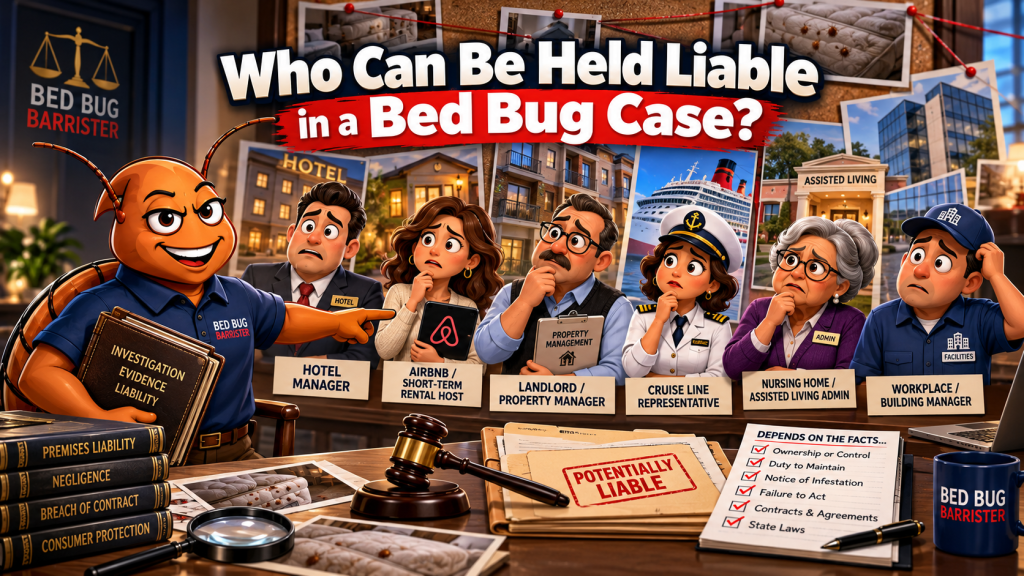
Responsibility for bed bug extermination depends heavily on the type of property involved and state-specific housing rules. Hotels, resorts, cruise ships, employers, and property managers may all face different obligations depending on the circumstances.
Liability frequently becomes one of the most disputed issues in infestation-related situations.
Examples may include:
- Hotels and Resorts: Hospitality businesses are generally expected to maintain reasonably safe accommodations and address infestations promptly.
- Short-Term Rentals: Responsibility may depend on ownership structure, host obligations, and management involvement.
- Workplaces: Commercial property owners or employers may bear responsibility depending on building control and maintenance obligations.
- Nursing Homes or Assisted Living Facilities: Care facilities frequently carry elevated responsibilities due to resident vulnerability.
Because liability questions vary substantially, early evaluation often helps identify who may ultimately bear responsibility.
State Laws And Housing Rules Can Influence Resolution
Some states and municipalities impose additional obligations regarding treatment timelines and property owner responsibilities.
Examples may include:
- Inspection requirements
- Disclosure obligations
- Multi-unit treatment protocols
- Habitability standards
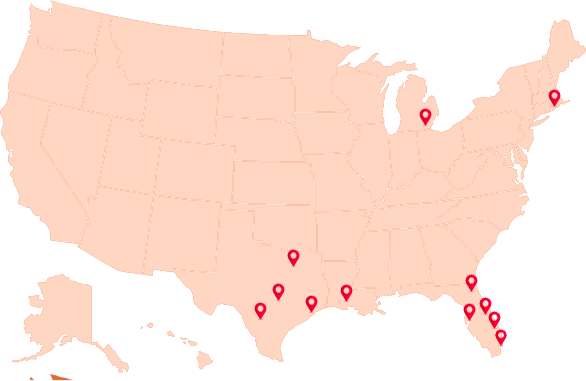
States such as Florida, Texas, Massachusetts, Michigan, and Louisiana each maintain different landlord obligations and negligence considerations that may affect infestation management.
Early reporting often protects both health and legal rights.
How The Bed Bug Barrister Helps
Long infestations often create more than inconvenience. Delayed treatment, repeated exposure, medical complications, and inadequate responses from property owners can sometimes create legal issues.
The Bed Bug Barrister focuses exclusively on bed bug-related injury and negligence matters nationwide. Powered by RTRLAW, founded in 1988, our team helps evaluate situations involving:
- Hotels and resorts
- Short-term rentals
- Cruise ships
- Nursing homes
- Workplace exposure
- Student housing
Not every infestation creates a viable legal claim, but understanding your rights matters.
Call For A Free Case Evaluation Now!
Bed bug infestations rarely disappear overnight. While small infestations may resolve within weeks, larger infestations often require months of treatment, monitoring, and prevention efforts before full eradication occurs.
The sooner bed bugs are identified and addressed properly, the faster recovery often becomes. If delayed treatment, negligence, or repeated exposure caused harm, The Bed Bug Barrister is here to help.
Contact us today by calling (844) 404-1600 for a free case evaluation.