
 CALL US NOW
 EMAIL US NOW
Workplace Bed Bug Exposure Injury Attorneys Helping Victims Throughout The Country
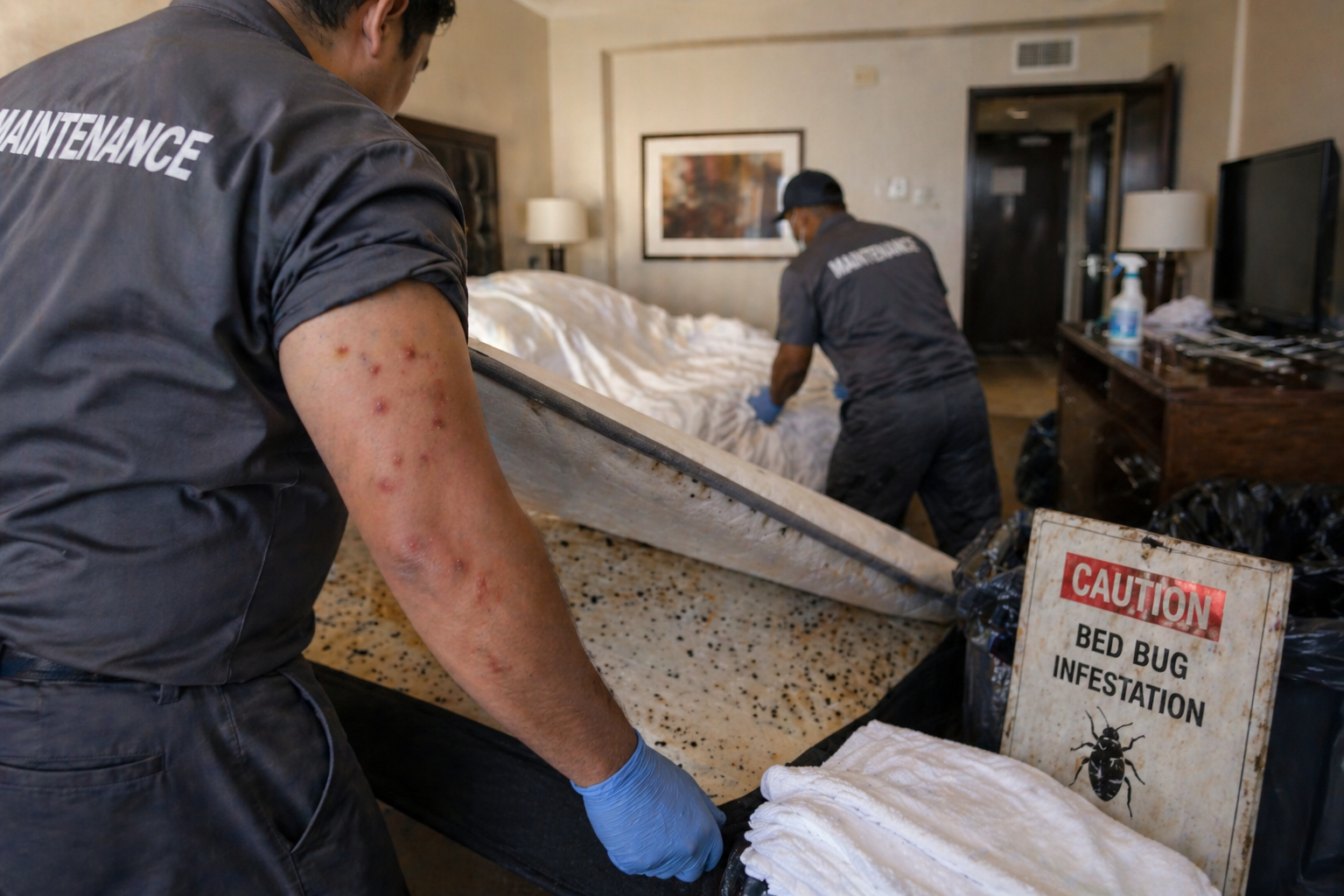
Workplaces are expected to provide safe and sanitary environments for employees, clients, and visitors. When employers or property managers fail to address bed bug infestations, exposure can lead to repeated bites, infections, and significant disruption to daily life and work performance.
Our bed bug injury attorneys help individuals understand when workplace bed bug exposure may involve legal responsibility. You deserve clarity, guidance, and a legal team that understands how these cases differ from traditional injury claims.
Our Legal Expertise That Informs Our Approach
Workplace bed bug cases are often more complex than other types of exposure claims. These cases may involve employer responsibilities, commercial property management, and in some situations, workers’ compensation considerations.
The Bed Bug Barrister is powered by RTRLAW, a firm founded in 1988 that has assisted clients and their families in their recoveries by providing insight on injury and workplace-related negligence issues.
What You Should Do After Bed Bug Exposure at Work
Taking immediate action after suspected exposure in the workplace is critical. Early documentation and reporting can help protect both your health and your ability to pursue a claim if appropriate.
Key steps include:
- Seek medical attention for bites, allergic reactions, or infections
- Photograph bites over time and document symptoms
- Document the work environment, including furniture, shared spaces, and potential infestation areas
- Report the issue to a supervisor, HR department, or management in writing
- Keep copies of incident reports, emails, and workplace communications
- Avoid discarding items until they are documented
These steps help establish notice and show how the employer or property responded. Early reporting is especially important in workplace settings where responsibility may be disputed.
How the Law Handles Workplace Bed Bug Cases
Workplace bed bug exposure cases can fall under several legal frameworks depending on the circumstances. These may include premises liability, negligence, and in some cases, workers’ compensation laws.
The key issues are who exactly are the responsible party or parties, and whether they knew, or should have known, about the infestation and failed to take reasonable steps to address it. Determining which legal path applies is often one of the most important aspects of these cases.
Employer Responsibilities
Employers are generally expected to maintain reasonably safe working conditions for employees. This includes addressing known hazards, which can include pest infestations in certain environments.
Liability may arise when an employer ignores complaints, delays treatment, or allows employees to continue working in infested conditions. However, these cases are often fact-specific and may depend on how the exposure occurred and how the employer responded.
Commercial Property Owners & Property Managers
In many workplace environments, the building is owned or managed by a separate entity. Property owners and management companies may be responsible for maintenance, pest control, and overall building conditions.
Liability can depend on who controlled inspections, who received complaints, and who was responsible for treatment. Identifying the correct party is critical, especially in multi-tenant office buildings.
Workers’ Compensation Considerations
Some workplace bed bug cases may fall under workers’ compensation systems, particularly if the exposure is considered job-related. These claims are different from traditional injury lawsuits and may limit the types of compensation available.
However, not all cases are limited to workers’ compensation. In some situations, third-party claims may be possible if another entity contributed to the exposure. Understanding these distinctions is essential when evaluating a claim.
Statute of Limitations
Workplace-related injury claims are subject to strict deadlines, which vary depending on the legal framework and state law. Missing these deadlines can prevent recovery.
Because symptoms may develop over time, it is important to act quickly once exposure is suspected. Early legal evaluation helps determine which deadlines apply and ensures evidence is preserved.
Unique Legal Challenges in Workplace Bed Bug Cases
Workplace bed bug cases often involve proving that the exposure occurred at work rather than another location. This can be difficult when individuals travel, commute, or interact with multiple environments.
Another challenge is that employers may dispute the presence of bed bugs or attribute bites to other causes. These factors make documentation, medical evaluation, and workplace reporting essential to building a viable claim.
How We Help Workplace Bed Bug Victims
Workplace exposure cases require careful evaluation to determine whether a claim is viable and which legal path applies. Our role is to analyze the facts and provide clear guidance.
We help by:
- Reviewing workplace conditions and reporting history
- Analyzing medical documentation and exposure timelines
- Identifying responsible parties, including employers and property owners
- Evaluating workers’ compensation and third-party claim options
- Negotiating or pursuing claims where appropriate
Our goal is to provide clarity and pursue accountability when the evidence supports it.
Types of Compensation Available
Compensation in workplace bed bug cases depends on the type of claim and the facts involved. Some cases may involve workers’ compensation benefits, while others may allow broader recovery.
Compensation may include:
- Medical expenses and treatment
- Lost wages or reduced earning capacity
- Pain and suffering (in certain claims)
- Emotional distress and sleep disruption
- Out-of-pocket costs related to exposure
A detailed evaluation helps determine what options may be available.
Common Injuries From Bed Bug Exposure
Bed bug exposure in the workplace can lead to both physical and psychological effects. These injuries can worsen over time if exposure continues.
Common injuries include:
- Allergic reactions and severe itching
- Secondary infections
- Scarring or skin damage
- Anxiety, stress, and sleep disturbances
These injuries are often underestimated but can significantly impact daily functioning.
Why Choose The Bed Bug Barrister
Workplace bed bug cases require a realistic and strategic approach due to their complexity. Not every exposure leads to a viable claim, but when negligence is involved, accountability matters.
Clients choose The Bed Bug Barrister because we offer:
- A bed bug–only legal focus
- National experience powered by RTRLAW
- Clear communication about case viability
- No upfront costs or out-of-pocket fees
- A commitment to pursuing claims where evidence supports responsibility
You get a focused legal strategy backed by decades of experience.
What to Expect After Contacting Us
Reaching out for help should feel simple and supportive. Our intake process is designed to evaluate your situation and provide clear next steps.
After contacting us, you can expect:
- A free, confidential consultation
- Review of your documentation and timeline
- Evaluation of liability and claim options
- Guidance on next steps
- Support through the claims process if appropriate
You will have clarity from the start.
FAQs
Can I sue my employer for bed bug exposure?
It depends. Some cases fall under workers’ compensation, while others may involve third-party liability.
What if my workplace denies there are bed bugs?
Documentation, medical records, and reports from others can help establish proof.
Do I need medical documentation?
Yes, medical records are important for showing the severity and legitimacy of injuries.
Are workplace cases harder to prove?
They can be, especially when exposure location is disputed. Strong documentation improves viability.
Contact Us For A Free Case Evaluation Today!
You don’t have to navigate workplace bed bug exposure on your own. If your employer or property failed to act and you were harmed, The Bed Bug Barrister is here to help.
Contact us today by calling (844) 404-1600 for a free consultation and get clear answers about your options.