
 CALL US NOW
 EMAIL US NOW
Bed bug cases are often difficult to win because proving liability involves more than showing bed bugs existed. Victims frequently must prove where exposure occurred, who knew, or should have known, about the infestation, whether reasonable action was taken, and how the exposure caused measurable harm.
Unlike many injury cases, bed bug claims often involve disputed timelines, missing evidence, and competing explanations. Strong documentation, medical records, and clear proof of negligence are often what separate viable cases from difficult ones.
Key Takeaways
- Bed bug cases frequently hinge on proving notice and negligence
- Identifying where exposure occurred can be challenging
- Property owners often dispute responsibility
- Medical documentation is critical
- Early evidence collection can significantly improve claim strength
Understanding Why Bed Bug Claims Are Different
Many people assume that finding bed bugs automatically creates a lawsuit. Unfortunately, the legal system often requires substantially more proof.
A bed bug infestation by itself does not necessarily establish negligence. The legal question is often whether a property owner, hotel operator, cruise line, or business failed to take reasonable steps after learning, or reasonably should have learned, about the problem.
This distinction creates one of the biggest challenges in bed bug litigation. Proving bed bugs existed and proving someone is legally responsible are often two very different things.
Proving Where Exposure Actually Happened
One of the most common obstacles in bed bug cases is establishing where exposure occurred. Bed bug bites frequently appear hours or even days after contact.
Someone staying in multiple hotels, visiting family, traveling through airports, taking a cruise, or sleeping in several locations may struggle to prove exactly where exposure happened.
Property owners frequently raise arguments such as:
- Exposure happened elsewhere
- The infestation originated from another guest or tenant
- The bites may have another explanation
- There is insufficient evidence linking the location to the injury
The longer someone waits to document evidence, the harder these disputes can become.
Proving Notice Can Be Extremely Difficult
Many bed bug claims revolve around a single legal concept: notice.
In simple terms, notice means showing that the responsible party either:
- Knew about the infestation
- Should have known about it
- Failed to act reasonably after learning about it
Hotels may argue they had no prior complaints. Landlords may claim they responded appropriately. Cruise operators may dispute that a cabin had prior issues.
Without documentation showing delayed treatment, repeated complaints, inspection failures, or poor response efforts, proving liability becomes much more difficult.
Medical Documentation Frequently Makes Or Breaks Cases
Medical evidence helps establish that the exposure caused real harm rather than temporary inconvenience.
Strong documentation may include:
- Medical records
- Urgent care visits
- Dermatology evaluations
- Allergy treatment
- Prescription medications
- Photographs documenting progression
- Mental health treatment records when psychological injuries develop
Bed bug injuries often extend beyond bites alone. Severe reactions, infections, scarring, insomnia, anxiety, and emotional trauma may become important components of damages.
Without documentation, insurers and defendants often argue injuries were minor or unrelated.
Property Owners Often Defend These Cases Aggressively
Hotels, landlords, resorts, cruise operators, and businesses frequently defend bed bug claims aggressively because infestations can create significant reputational concerns.
Defendants may argue:
- They followed proper protocols
- Treatment occurred promptly
- The infestation originated elsewhere
- The injuries are exaggerated
- The evidence is insufficient
Because of these defenses, successful bed bug cases often depend heavily on timelines, records, photographs, inspections, and witness evidence.
Example Scenarios Showing Why Cases Become Difficult
Bed bug claims often become challenging because facts are rarely as straightforward as people expect. The following examples illustrate how disputes can develop and why strong evidence matters.
Hotel Guest With Immediate Documentation
A traveler notices bites during their stay, photographs the mattress, reports the issue immediately, and seeks medical treatment.
- Challenge level: Lower.
Early documentation helps establish notice and exposure location.
Cruise Passenger With Delayed Symptoms
A passenger notices bites several days after returning home following a cruise vacation.
- Challenge level: Higher.
The cruise operator may argue exposure happened elsewhere.
These examples show why timing, documentation, and property response often determine whether a claim becomes viable. These examples show why timing, documentation, and property response often determine whether a claim becomes viable.
State Laws Can Add Additional Complexity
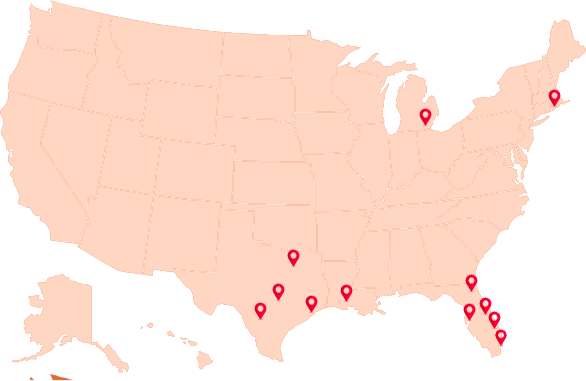
Bed bug claims may also become harder depending on where the exposure occurred. Different states impose different filing deadlines, landlord obligations, and liability standards.
Examples include:
- Florida: Generally approximately 2 years for personal injury claims
- Texas: Typically 2 years from injury
- Massachusetts: Often up to 3 years depending on when the injury is discovered
- Michigan: Generally 3 years
- Louisiana: Generally 2 years to file a personal injury claim
Delays can create problems beyond deadlines alone. Evidence disappears, witnesses become unavailable, and records become harder to obtain.
How The Bed Bug Barrister Helps Evaluate Difficult Cases
Not every bed bug exposure creates a viable legal claim. One of the biggest mistakes people make is assuming bites alone automatically establish liability.
The Bed Bug Barrister focuses exclusively on bed bug-related injury matters and understands the challenges that make these cases difficult. Powered by RTRLAW, founded in 1988, our team brings decades of injury litigation experience while maintaining a focused approach to bed bug accountability.
We help evaluate:
- Documentation quality
- Medical evidence
- Property responsibility
- Notice issues
- Exposure timelines
- Potential liability challenges
Clear expectations matter. Understanding weaknesses early can be just as important as identifying strengths.
Contact Our Offices Today For A Free Consultation!
Bed bug cases are difficult to win because they often involve complicated questions about proof, responsibility, notice, and damages. The strongest claims typically involve prompt reporting, thorough documentation, medical evidence, and clear signs that someone failed to act reasonably.
If bed bug exposure caused harm and you are unsure whether you have a viable claim, The Bed Bug Barrister is here to help. Contact us by calling (844) 404-1600 for a free case evaluation and get clear answers about your situation.